Presenting a $30,000 Smile Makeover Without Losing the Patient on Price
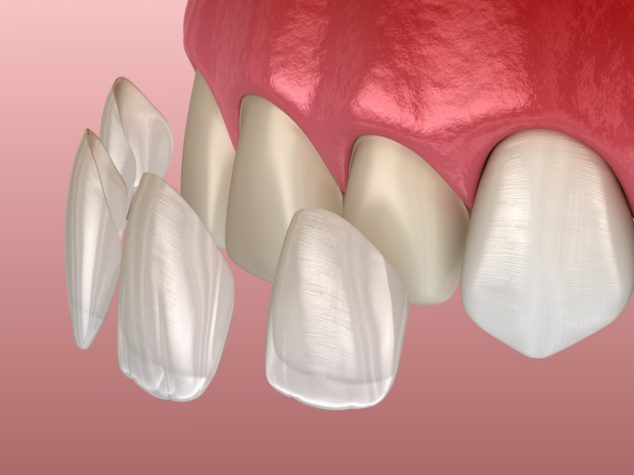
Smile makeover patients are different from every other patient in your chair.
They usually don’t come in because something hurts. They come in because they want or need something that only a nice smile can provide. A wedding is coming. A promotion. A second chance at a first impression. The emotional investment is already there before they sit down. That’s half the battle.
With smile makeover patients, the key is to help them figure out a way to make the desired treatment affordable. Yet, this is a profound advantage most dental practices squander the moment the treatment coordinator quotes the total fee. Although the desire is real, the funding conversation is what kills it.
The Elective Case Has a Different Stall Point
When a patient needs full mouth reconstruction, the obstacle is convincing them that the clinical reality justifies the cost. The case has to be made. With a smile makeover, that case is already made. The patient made it themselves before they ever called the office.
What stalls the elective case isn’t doubt about the procedure. It’s the gap between how badly the patient wants the outcome and how impossible the price feels in the moment. That gap is entirely a presentation problem, and it’s one your team can solve.
A comprehensive smile makeover combining porcelain veneers, composite bonding, gum contouring, and crown lengthening can easily reach $25,000 to $35,000 or beyond depending on the scope. That number, presented without context or a funding framework, lands like a wall. The patient who walked in excited walks out deflated, telling themselves they’ll think about it, save up, come back someday.
Someday rarely comes. And the practice loses a case it had already won.
What the Patient Is Actually Asking
When a smile makeover patient hears a large number and goes quiet, they aren’t questioning whether they want the treatment. They’re asking a single silent question: is there a version of this that I can actually do?
Most treatment coordinators interpret the silence as resistance and begin softening the case, offering to phase the treatment, suggesting a scaled-back version, discounting elements of the plan. That instinct is understandable, but almost always wrong. You don’t need to shrink the case. You need to answer the question the patient is actually asking.
The answer is almost always yes, if your team has the tools to find it.
Elective Doesn’t Mean Uninsured
One of the most persistent myths in dental treatment presentation is that cosmetic cases have no fundable sources beyond financing. That assumption quietly kills more smile makeover cases than any other single factor.
Dental insurance rarely covers purely cosmetic procedures, and most patients know that. What they don’t know is that the funding sources available to them extend well beyond insurance. A patient planning a smile makeover may have an FSA balance they haven’t touched, an HSA that’s been accumulating for years, a cash deposit they’re willing to put forward, and the capacity to finance the remainder at a monthly payment that fits their budget.
Payment stacking works on elective cases exactly the way it works on clinical ones. The sources are the same. The math is the same. The only difference is that the patient’s motivation is higher, which makes the closing conversation easier if the presentation gives them something to say yes to.
Running the Numbers on a Smile Makeover
Consider a patient presenting for a full smile makeover: ten upper porcelain veneers, composite bonding on the lower anteriors, gum contouring to even the gumline, and crown lengthening on two teeth to create better proportion. Total treatment fee: $28,500.
That patient has $1,200 in remaining dental insurance benefit, $2,800 in FSA funds they need to spend before year end, $3,500 in HSA, and they’re willing to put $4,000 down in cash. That’s $11,500 in stacked funding before financing enters the conversation.
The remaining $17,000 financed over seven years produces a monthly payment in the range of $240 to $270 depending on rate. That’s a car payment. For an outcome they’ve been wanting for years.
The Case-Closed Pro calculator builds that plan in the room, in real time, with the patient watching every dollar stack. When the monthly number appears, the emotional arc of the consultation changes completely. The patient who walked in wanting this and almost walked out defeated now has a concrete answer to the question they couldn’t ask out loud.
The Cosmetic Consultation Is a Closing Opportunity
Practices that consistently close high-dollar smile makeovers treat the consultation differently than practices that don’t. The clinical presentation, shade selection, digital imaging, mockups, before and after examples, is designed to deepen desire. That work is valuable and most cosmetic-focused practices do it well.
What often gets left out is the financial presentation that matches the energy of the clinical one. If the clinical side of the consult is polished, personalized, and visual, and the financial side is a printed fee schedule and a financing brochure, there’s a disconnect that undermines everything that came before it.
The payment plan conversation deserves the same preparation and intentionality as the clinical one. When a treatment coordinator can pull up a calculator, enter the patient’s specific funding sources, and show them a personalized monthly payment in the same appointment where they fell in love with their projected result, the two halves of the consultation reinforce each other. Desire and affordability land at the same moment.
That’s when smile makeover cases close.
What the Patient Takes Home
Smile makeover decisions rarely happen in the chair. The patient goes home, looks in the mirror, thinks about the number, talks to their spouse, and either comes back or doesn’t. What they carry with them from that consultation determines which way it goes.
A patient who leaves with a personalized, itemized payment plan showing their insurance benefit applied, their FSA balance accounted for, their HSA included, their cash deposit credited, and a clear monthly financing payment has something to hold onto. It’s not a quote. It’s their plan. It has their name on it and it answers the question they were afraid to ask.
Case-Closed Pro generates that document at the end of every calculator session. One page, professionally formatted, patient-facing, and specific to the case in front of you. That document does more closing work at the kitchen table than any brochure ever will.
The Practice That Closes Cosmetic Cases at This Level
Closing a $30,000 smile makeover isn’t a function of having the most sophisticated imaging technology or the most impressive before and after gallery. Those things help. But the practices that close these cases consistently have something more fundamental in place: a treatment coordinator who knows how to answer the affordability question with a real number, built from the patient’s own resources, in the room, before the consultation ends.
That capability doesn’t come from training alone. It comes from having a system that makes the complexity of multi-source funding simple enough to present in a single appointment.
The smile makeover patient is already sold on the outcome. The only job left is showing them how to get there.
Give your team the calculator that closes the gap.
Can I afford this?
More often than you think, the answer is yes.
Your team just needs the system to prove it.
Case-Closed Pro is a dental treatment financing calculator built for treatment coordinators who present large comprehensive cases. It combines up to twelve payment methods into a single patient-facing payment plan — built live, in the consult room, in minutes.