When High-Value Treatment Plans Don’t Close: What to Do Next
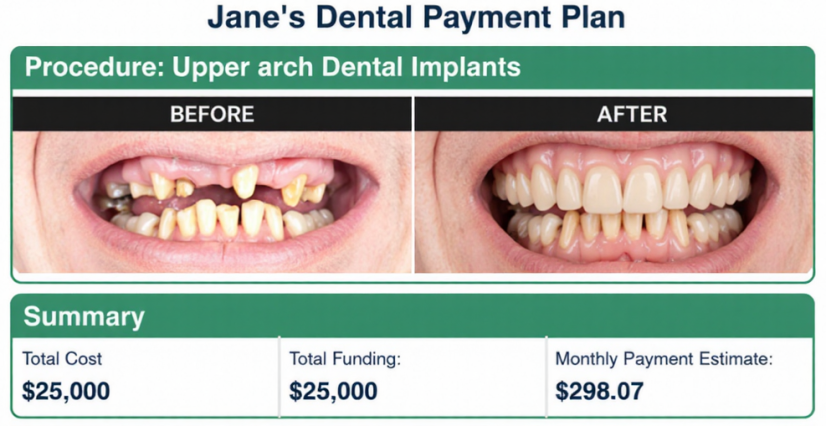
Case-Closed Pro • Practice Growth Blog
When a dental patient refuses a high-value treatment plan, the case isn’t necessarily lost. The final three minutes of that appointment are the highest-leverage closing opportunity most practices never use. This post covers the specific seed planting actions that keep an unclosed case alive and position it for a future close.
The most expensive moment in a dental consultation isn’t when the patient hears the number. It’s the three minutes after the patient stand up to leave without committing to treatment.
Most treatment coordinators treat that moment as the end of the conversation. They hand over a folder, say something like “take your time and let us know,” and move on to the next appointment. The case goes cold, the patient disappears, and the practice writes it off as a loss.
It isn’t a loss. It’s an unfinished close. And the difference between practices that recover these cases and those that don’t comes down to what happens in those final three minutes.
Reframe What Today’s Unclosed Dental Case Actually Is
What does it mean when a dental patient refuses a treatment plan?
A patient who leaves without committing hasn’t necessarily said no. In actuality, they’ve only said “not yet.” That distinction matters enormously for how a treatment coordinator approaches the end of a consultation.
“Not yet” means a strong clinical case has been made, and the patient understands their treatment needs. The desire is present but paying for the treatment may require some coaching to secure a Yes from the patient.
When it comes to high-value treatment plans, what’s usually missing is either a financial answer the patient can appreciate, a conversation they need to have with a spouse, or time to sit with the decision in a lower-pressure environment.
All three of those are workable. They just require the treatment coordinator to plant a seed deliberately rather than let the appointment expire.
Seed planting in high-value case acceptance is the deliberate practice of leaving every uncommitted patient with a personalized payment plan, a specific financial action, and a scheduled follow-up. Together these three elements create a closing sequence that continues working long after the appointment ends.
Planting Seeds In Dentistry Requires Giving the Patient a Plan
What should a patient take home after refusing a high-value dental treatment plan?
There is a meaningful difference between sending a patient home with basic information brochure and sending them home with an intentional plan.
A brochure describes the practice and the procedure. A fee sheet lists the costs. But neither of those two documents does anything to close the case at the kitchen table.
These documents aren’t designed to answer the most common question your patient still carries: “Can I actually afford this, and if so, how?”
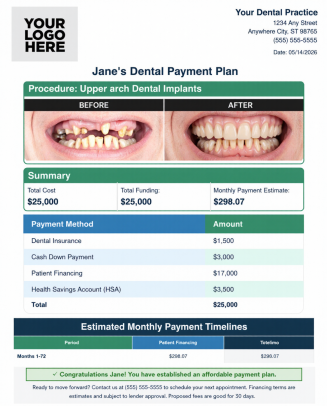
The document that answers these types of questions is a personalized, itemized payment plan. A partial payment strategy is a personalized funding document that shows a patient exactly how far their available resources take them toward the total treatment cost, including the remaining financial gap.
The patient leaves the consultation with a concrete financial picture rather than an overwhelming number.
The personalized document starts with embedding the patient’s name as part of the document. Seems trivial but it’s meaningful nonetheless.
If applicable, this document reflects the patient’s insurance benefit, their cash deposit, their FSA or HSA balance, patient financing or other expressed financial resources.
And If necessary, this document includes the remaining financial gap between the cost of treatment and the funding still needed to satisfy the total cost.
For example, the treatment fee is $24,000 but after exhausting a patient’s financial resources, there still remains an $11,000 gap. This is effective seed planting.
Case Closed Pro generates that document at the end of every calculator session. It is the difference between a patient who goes home with a folder and a patient who goes home with a reason to come back.
When a Dental Patient Refuses Treatment, Plant a Financial Seed
How do you keep a dental patient engaged after they leave without committing?
The most effective seeds are ones that give the patient something concrete to do between the consultation and the eventual close.
A patient who goes home with only a decision to make has nothing to act on. But the patient that leaves with a specific financial action has momentum to build on.
For patients approaching their employer’s open enrollment window, this is a significant opportunity.
For example, a treatment coordinator that understands how to explain the advantage of maximizing their FSA contributions for the coming year can directly affect the patient’s treatment affordability and move closer to case acceptance.
The same applies to an HSA. A patient who understands that increasing HSA contributions, during open enrollment, builds a dedicated pool of tax-free funds that can be used for dental services.
This creates a financial roadmap to treatment. The consultation planted it. Open enrollment waters it. The close happens in the new year with a patient who arrived already funded.
Set the Follow-Up Before Your Patient Leaves the Practice
How should a treatment coordinator handle follow-up after an unclosed dental case?
The follow-up call that catches a patient off guard rarely goes well. The follow-up call the patient agreed to before they left the building almost always does.
A patient that walks out the door uncommitted, should receive a specific, agreed-upon next contact. Not “we’ll reach out in a few days.” This needs to be a follow up that the patient participates in setting.
“I’ll give you a call Thursday. This way you’ll have a chance to answer any questions that come up after you’ve had a chance to look everything over. Does morning or afternoon work better for you?”
That question does two things. It frames the follow-up as a service rather than a sales call. It also gets a verbal commitment from the patient that they expect to hear from the practice.
A patient who has agreed to a follow-up call is not a lost case. They are a scheduled conversation with someone who is still considering a procedure they know they need.
Best Use of the Last Three Minutes in a Dental Consultation is a Skill
What should a treatment coordinator do in the final three minutes of a dental consultation?
Closing the patient who is ready to say yes in the chair is a function of the clinical presentation and the payment plan. Closing the patient who needs more time is a function of what the treatment coordinator does in the final three minutes of the appointment.
When money is clearly the objection, those final three minutes should include the suggestion of a financial solution to treatment affordability.
A personal payment plan document should be generated and placed in the patient’s hands. And finally, a specific follow-up must be agreed to before the patient reaches the door.
Every one of those three things is a seed. Together they create a closing sequence that continues working after the appointment ends.
The treatment coordinator who masters this sequence doesn’t just improve their same-day close rate. They build a pipeline of patients who came in undecided, left uncommitted, and came back financially ready for treatment.
That pipeline compounds over time in ways that same-day closes alone never will.
What the High-Value Pipeline Looks Like at Scale
What is the production value of recovering unclosed high-value dental cases?
Consider what a practice with 20 large treatment plans that sit in limbo. What if even five of those patients closed in 30 days by taking a simple systematic approach? Especially when the alternative is these cases go completely cold.
At an average case value of $30,000, this recovery is worth $180,000 in production.
Equally important, these five patients would be left to continue suffering with the debilitating pain of their physical circumstances, unnecessarily.
These are treatment plans that your practice have already spend time attracting. Cases that you’ve already presented. Patients who’ve already earned the trust from.
The only difference is a treatment coordinator who knew what to do in the final three minutes.
This is effective seed planting. A deliberate, repeatable closing sequence that runs parallel to same-day acceptance, and builds a production pipeline that most practices are currently leaving on the floor.
Give the Seed Something to Grow Into
What tools help treatment coordinators close large dental cases after the first consultation?
The seed only becomes a close if there is something for the patient to return to. A vague memory of a large number and a conversation about financing isn’t enough to bring someone back.
A personalized payment plan document, a concrete financial action tied to open enrollment, and a scheduled follow-up conversation offers the patient three reasons to re-engage.
The Case Closed Pro calculator makes the first of those possible in every consultation, for every case, regardless of whether the patient says yes in the chair or not.
The patient who didn’t close today isn’t gone. They just need the right seed planted at the right moment.
Your treatment coordinator can be the person who plants it.
FAQs
Common questions about seed planting
Seed planting in dental case acceptance is the deliberate practice of leaving a patient with something actionable after they decline to commit to treatment same day. Rather than treating the unclosed case as a loss, the treatment coordinator plants a financial strategy — a personalized payment plan document, an open enrollment recommendation, or a follow-up appointment — that keeps the case moving toward a close. Case Closed Pro generates the patient-facing payment plan that makes this possible in every consultation.
A partial payment strategy is a personalized document showing a patient how far their available funding sources take them toward the total treatment cost, even when a gap remains. If a patient’s resources cover $13,000 of a $24,000 case, the document shows exactly that — along with the remaining $11,000 gap — giving the patient a concrete financial picture to take home rather than an overwhelming total. This approach is one of the most effective forms of seed planting because it replaces an abstract number with a specific, patient-owned plan.
Patients approaching their employer’s open enrollment window have a time-sensitive opportunity to elect higher FSA or HSA contributions that can directly reduce the out-of-pocket cost of a planned procedure. A treatment coordinator who surfaces this connection during a consultation gives the patient a concrete financial action to take between the appointment and the eventual close. Patients who increase their FSA or HSA election with a specific procedure in mind often return the following year fully funded and ready to proceed.
The most effective follow-up is one the patient agrees to before leaving the practice, not a call that catches them off guard days later. Before the patient walks out, the treatment coordinator should establish a specific day and time — framing the call as an opportunity to answer questions after they’ve reviewed their payment plan — and get a verbal commitment that they expect to hear back. A patient who has agreed to a follow-up is a scheduled conversation, not a lost case.
Case Closed Pro is built specifically for the moment a patient hears a large treatment fee and goes quiet. The calculator walks the treatment coordinator and patient through up to twelve funding methods in a single session, layering each source in real time until the financing gap shrinks to a monthly payment the patient can say yes to. At the end of every session it generates a professional, patient-facing payment plan document the patient takes home — giving the treatment coordinator a closing tool that continues working long after the appointment ends.
Can I afford this?
More often than you think, the answer is yes.
Your team just needs the system to prove it.
Case-Closed Pro is a dental treatment financing calculator built for treatment coordinators who present large comprehensive cases. It combines up to twelve payment methods into a single patient-facing payment plan — built live, in the consult room, in minutes.